
Is GenAI desktop publishing?
From October 2025

Everybody and his cat seems to be talking about the recent HBR article about GenAI-create workshop that detracts from productivity? They should be — it make some important points, even it comes to the wrong conclusions.
The article correctly points out that fiendish office worker are using GenAI to create long, poorly reasoned documents, creating cognitive load for people who have to read them. (Of course, the readers are probably using GenAI to summarize the documents, mitigating impact, but not really creating any net productivity!)
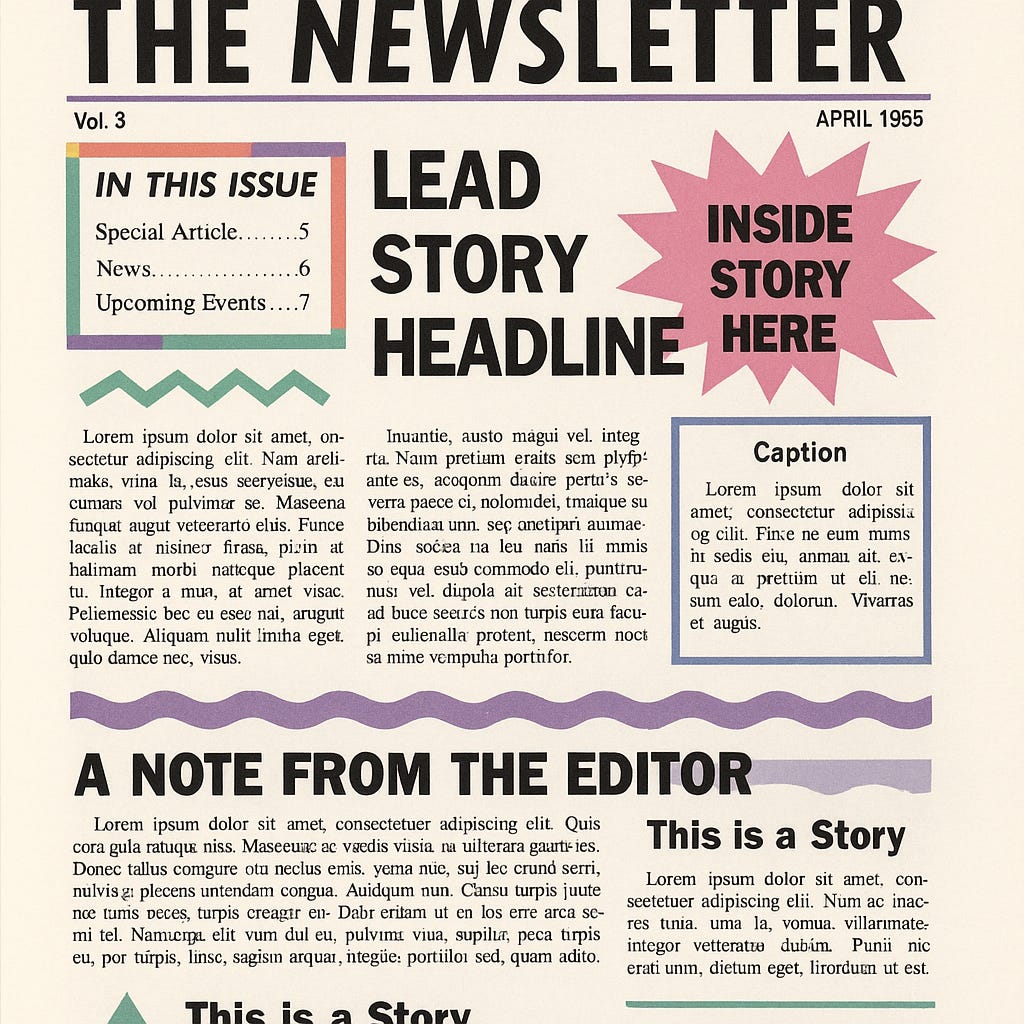
Is GenAI like desktop publishing in the early 1990s? Where hordes of office workers used PageMaker to create pointless and hideously ugly flyers, brochures and posters. As someone who learned a little bit about page layout and typography running a colleagiate newspaper in that era, I can’t begin the communicate just how horrible some of the early outputs of desktop publishing work. It was like giving a sports car to a toddler.
Or is GenAI more like the original word processors and spreadsheets? During the 1980s competitive proposals got a lot more involved — you could create a more tangible (and more detailed! And longer!) RFP response with access to desktop applications than you could with a typewriter and an adding machine. Even if the information in the RFP response was good, did it matter? Or did it just create an arms race between bidders, in which they have to create more involved proposals just to be competitive? Or did the incremental information help buyers make more informed decisions?
The article misses the point when it comes to actions. It cautions leaders to be clear about objectives and encourage collaboration. Yes — those are good things to do in any situation, but they miss the point.
Especially now, the “last mile” — between the screen and the readers’ cortex — matters most. Edward Tufte reminds us that humans can consume massively more information when it’s structured well, which implies two imperatives:
- Use GenAI to create tables and other structured data that humans can consume quickly
- Especially use GenAI to convert unstructured text into structured data that we can analyze deterministically.
Think about all the text (sales reports, comments in case histories) that can be converted into metadata to generate operational and strategic insight!
Desktop publishing democratized tools without literacy; GenAI structured extraction raises the ceiling. The real ROI is decision quality, not document length